
3D PRINTING GUIDE
FDM 3D print strength: why layer direction matters
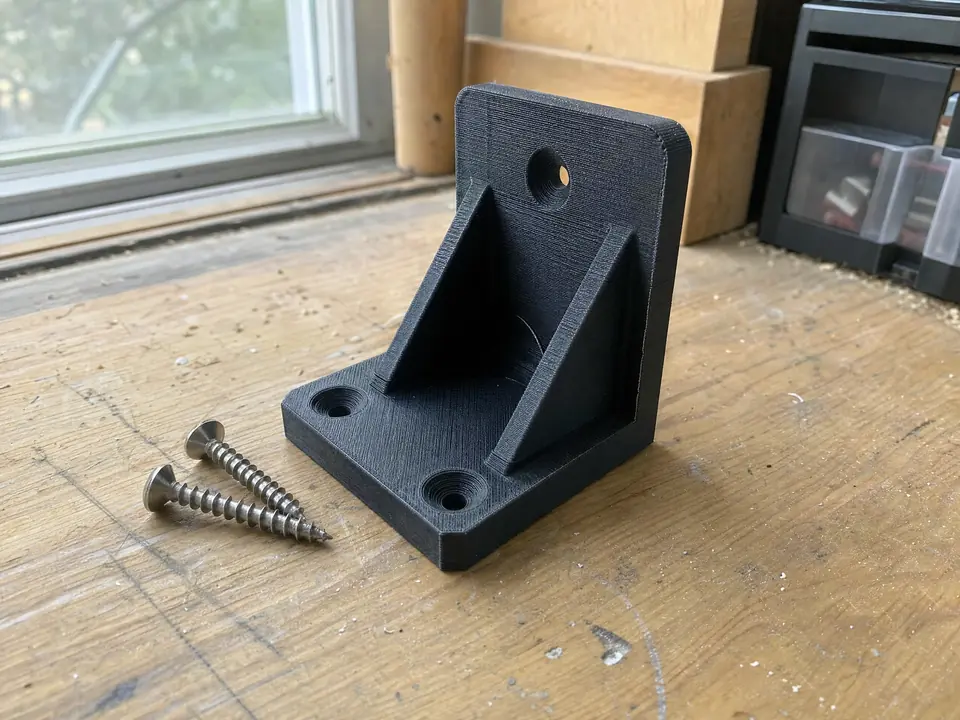
Illustrative image; not a documented customer order.
FDM parts are built layer by layer. Their strength therefore depends not only on the filament but also on how the component is oriented and loaded. This is particularly important for brackets, clips and mechanical parts.
Why are FDM prints direction-dependent?
Material deposited within one layer may behave differently from the bond between adjacent layers. A part under tension across its layer interfaces may fail sooner than the same geometry printed in another orientation.
Choosing print orientation
Orientation affects stress paths, the number of supports, surface finish and accuracy. If you know the principal force direction, include it when requesting a quote. There is no universally optimal orientation: improving strength in one direction may reduce accuracy or surface quality elsewhere.
Wall count, infill and thickness
Increasing infill is not always the most effective way to strengthen a part. Wall thickness, local reinforcements, rounded transitions and sufficient material around holes can be more important. Thin sharp corners often concentrate stress.
Repeated loading and environmental conditions
Clips and flexible joints may experience repeated bending. Temperature, moisture, sunlight and long-term loads can also affect performance. Material selection should account for real operating conditions.
Testing for functional parts
For a critical fit or mechanical application, request a sample and validate it under representative conditions. FDM printing by itself does not certify structural or safety performance.
Compare PLA, PETG and TPU and review dimensional tolerances.