
3D PRINTING GUIDE
Small-batch 3D printing: planning a short production run
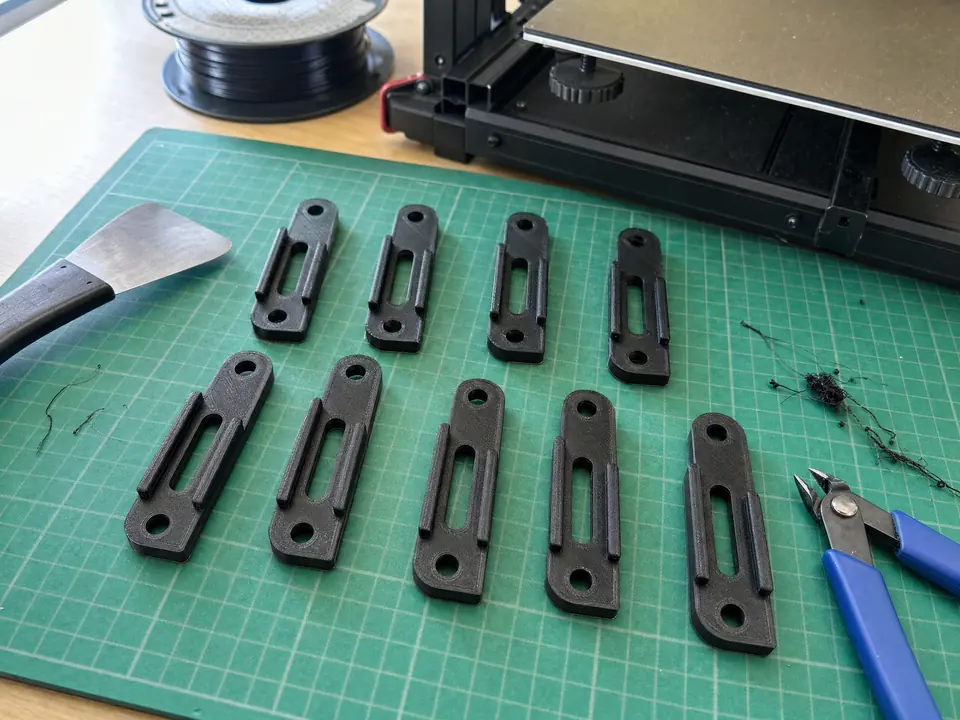
Illustrative image; not a documented customer order.
A small batch is a series of a few or a few dozen repeatable parts rather than mass production. FDM can be a sensible solution because it does not require an injection mould. However, the best method still depends on part geometry, surface quality, function and quantity.
When does short-run printing make sense?
Examples include assembly fixtures, mounting brackets, spacers, prototype housings and accessories for a specific product. It is particularly useful while a design is still changing or several slight variants are required.
Approve a reference part first
Producing twenty pieces from an untested model reproduces the same mistake twenty times. Start with a representative sample, check assembly and functional requirements, then approve the reference geometry before manufacturing the batch.
Repeatability and tolerances
Small dimensional variations can arise from shrinkage, orientation and process conditions. Clearly mark the dimensions that matter and agree how they should be verified. If several components fit together, test representative pieces from the batch rather than only the first print.
Batch planning and pricing
For an efficient quote, specify the part count, file versions, material, colour, target deadline and any inspection or packing requirements. If variants are needed, assign part numbers. Large production quantities may justify evaluating other manufacturing techniques.
Quality control
Agree in advance on acceptable surface marks, layer visibility, critical dimensions and handling of rejected parts. Functional acceptance should be based on the real application, not solely the appearance of a model.
Read more about FDM tolerances and printing costs.